

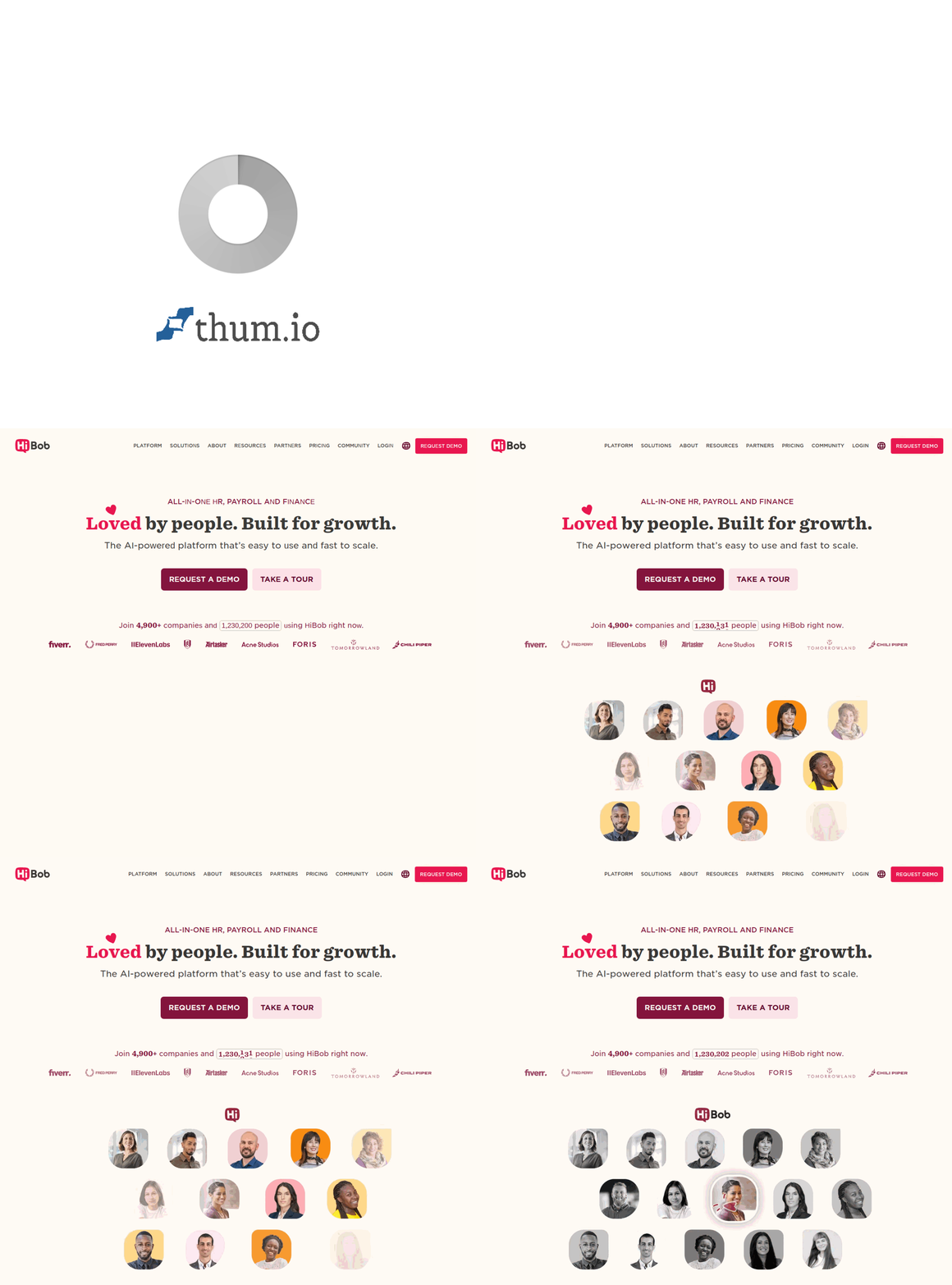

What is HiBob?
HiBob (also known as Bob) is a modern HR platform built for mid-sized, fast-growing companies. Unlike legacy HRIS systems designed for administrative compliance, HiBob emphasizes employee engagement, company culture, and people analytics alongside core HR functions.
The platform serves companies typically between 100-3,000 employees—organizations large enough to need systematic HR processes but wanting modern, user-friendly tools that employees actually enjoy using. HiBob helps HR teams shift from administrative overhead to strategic people operations.
[cta text="Manage Your People with HiBob"]Key Features
Core HR & People Data
Centralize employee records, organizational charts, and company documents. Track employment history, compensation, benefits, and custom attributes. Self-service access lets employees update personal information and request time off without HR intervention.
Time & Attendance
Track work hours, manage leave requests, and handle attendance policies across global teams. Support for different time-off policies by location, role, or tenure. Integration with payroll systems ensures accurate compensation.
Performance Management
Run performance review cycles with customizable templates and workflows. Enable continuous feedback through 1:1 meeting tools and recognition features. Goal setting and tracking align individual objectives with company direction.
Compensation Management
Plan compensation cycles with budget controls and approval workflows. Benchmark salaries, manage equity grants, and ensure pay equity across the organization. Compensation data integrates with performance for merit-based decisions.
Onboarding
Automate new hire workflows from offer acceptance through first-day readiness. Pre-boarding tasks, equipment provisioning, and training assignments happen automatically. New employees arrive prepared and engaged from day one.
People Analytics
Dashboards visualize workforce metrics—headcount trends, turnover rates, diversity statistics, and engagement scores. Custom reports answer strategic questions about your workforce without spreadsheet gymnastics.
Culture & Engagement
Features like Kudos for peer recognition, Clubs for interest groups, and Shoutouts for celebrations build culture digitally. Especially valuable for distributed and hybrid teams maintaining connection.
Pricing
HiBob provides custom pricing based on company size and module selection. Typical pricing falls in the $8-15 per employee per month range depending on features selected. The platform targets mid-market companies; very small organizations may find it overbuilt for their needs.
Request demos and quotes for specific pricing based on your employee count and requirements.
[cta text="Manage Your People with HiBob"]Who Uses HiBob?
Tech companies and startups scaling from 100 to 1,000+ employees use HiBob to professionalize HR operations while maintaining startup culture. The modern interface matches expectations of tech-savvy workforces.
Global organizations with employees across multiple countries leverage HiBob's multi-country payroll integrations and localized compliance features. Managing international teams from one platform simplifies global HR.
Companies with distributed or hybrid workforces appreciate features designed for remote engagement—digital culture tools, async communication support, and location-independent HR processes.
HR leaders seeking to elevate their function from administrative to strategic find HiBob's analytics and employee experience focus enables that transformation.
Integrations
HiBob integrates with payroll providers globally (including ADP, Gusto, and local payroll systems), productivity tools (Slack, Microsoft Teams), recruiting platforms (Greenhouse, Lever), and identity providers (Okta, Azure AD). The open API enables custom integrations for specific workflows.
HiBob vs Competitors
HiBob vs Workday
Workday serves large enterprises with comprehensive HCM capabilities. HiBob targets the mid-market with faster implementation and better user experience. Workday for enterprise scale; HiBob for growing companies.
HiBob vs BambooHR
BambooHR serves small to mid-sized companies with core HR features. HiBob offers stronger performance, compensation, and culture tools. BambooHR for HR basics; HiBob for comprehensive people operations.
HiBob vs Personio
Personio targets European SMBs with strong local compliance. HiBob offers broader global coverage and more engagement features. Both serve similar markets; geography and specific needs guide the choice.
Pros and Cons
Pros
- Modern, intuitive user interface
- Strong culture and engagement features
- Comprehensive compensation management
- Excellent global/multi-country support
- Powerful people analytics
- Regular feature updates and improvements
Cons
- Pricing requires custom quotes (not transparent)
- May be overbuilt for very small companies
- Some modules require additional cost
- Implementation takes planning for complex setups
Frequently Asked Questions
What size companies use HiBob?
HiBob targets companies with 100-3,000 employees. Smaller companies may find simpler tools sufficient; larger enterprises may need more specialized HCM platforms.
Does HiBob handle payroll?
HiBob integrates with payroll providers rather than processing payroll directly. This approach enables working with local payroll systems globally while centralizing HR data.
How long does implementation take?
Typical implementations take 6-12 weeks depending on company size and complexity. HiBob provides implementation support, but data migration and process configuration require time investment.
Is HiBob good for remote teams?
Yes, HiBob's digital-first design suits distributed workforces well. Culture features, self-service access, and location-independent processes work regardless of where employees sit.
[cta text="Manage Your People with HiBob"]Final Verdict
HiBob succeeds by making HR software that employees and HR teams actually enjoy using. The combination of core HR functionality, performance management, compensation tools, and culture features creates a genuinely comprehensive people platform.
For mid-sized companies seeking modern HR systems that drive engagement rather than just compliance, HiBob represents the evolution of HR software. It's not trying to be everything to everyone—it's building the HR platform that growing, culture-conscious companies need.
Rating: 4.5/5




.png)